Showing posts with label at-home. Show all posts

Friday, April 8, 2016

Weekend Update 5-15-16

Hello, all!  What a busy week we've had!

I'll put my reminders here, in case you don't make it to the end of the post:

1.  Warm weather is here!  Please help your kindergartener remember to bring a REUSABLE water bottle each day.  Names on the water bottles make life easier for everyone!  Thanks for only putting water in water bottles.  We don't need juice, flavored water, or electrolyte drinks at school.

2.  Along with increased need for water, kindergarteners shed their red sweaters at an impressive rate in this heat; writing your child's name or initials on possessions that come to school, especially red sweaters, makes life easier for everyone!

3.  Your child brought home an intent to return form, which will secure their spot at Cascade next year.  Please return with your kindergartener, or drop off at the office.  You must fill out a SEPARATE form for each child.  Here is a link to a .pdf if it gets lost.  Due date is Monday, April 18.

4.  The auction is coming up soon!  Our auction basket is looking pretty good; thank you to everyone who has made a contribution.  We have the following items so far:  Monopoly, a big puzzle, Scrabble Flash, Yahtzee to Go, Yam Slam, Qwixx, UNO Attack, Beat the Parents, Sorry!, Say Anything, Apples to Apples.  We could use some fun/fancy snacks to round out the basket.

Upcoming week and important dates: 
(remember, you can always check our Ongoing Calendar by clicking here or by clicking on the tabs above).

Tuesday:  
Teacher Tea with Mr. Weaver in the Library.  Drop your children off in the morning, and then stay and ask questions, voice concerns, and give kudos.  8:00 to 8:30.

Riggs:
We will continue or study of new spelling words, which are carefully selected to introduce new concepts in English spelling patterns.

Riggs spelling homework as a new added component!  Each evening kindergarteners have new words, they will now write a sentence using one of the new words, and incorporating as many of our old words as possible.

Taped into your kindergartener's red homework folder is a list of all words we have learned so far, and through the rest of List 1.  On the back, you will find an example of what Riggs homework should look like.  Here is a link to a .pdf if it is easier to access it that way.

Saxon 1 Math:
Adding 10 to a number; counting by 10s from a single-digit number (7, 17, 27, 37, etc.); drawing a picture to solve a problem; comparing and ordering numbers to 100; counting by 100s.

Core Knowledge:
Continued study of conservation of resources; reduce, reuse, THEN recycle; trash audit of our school; pollution.

Life skills:
Finding ways to reduce consumption in our own lives (use both sides of paper, use scraps when possible, share with a friend, etc.).

Week in review

Riggs:
We got our first two-syllable spelling word!  To show syllable breaks, Riggs scholars place a bold dot, floating between the bottom baseline and the dotted midline.  Understanding of syllables helps emergent readers "clump" when they are decoding words, as well as prepares them for many new Riggs spelling rules.

Saxon 1 Math:
We spent quite a bit of time this week working to understand double-digit addition WITH regrouping (carrying).  We will keep on this big concept, and Saxon spirals around to it numerous times.  This class has a good understanding of place value, which will help them immensely.

Core Knowledge:
Began to explore the concepts of:

  • What is a resource? (something we use)
  • How can we conserve resources?  Why should we conserve resources?
  • What are ways we can reduce, reuse, and THEN recycle?  Why is recycling the last one?
Here is a thought-provoking article about why reduce and reuse are so much more important than recycling, and a link to a TEDx talk by the same presenter along the same lines.


Kindergarteners brought in items that were in their recycling or garbage cans at home, and came up with some great ideas on how they could be reduced and reused before being recycled (and not all of them involved crafting!):
Tin cans can be used as containers for pencils and pens.  

Body wash containers can be refilled from a larger container and used again!

You can use plastic tubs for keeping small items like money safe.

You can use larger jugs of juice to refill individual juice containers.  You can use them for water bottles.

Fruit and jello cups can be used as paint cups or to hold small items.

Egg cartons can be used for organizing things like Lego, earrings, or other small things.


Wednesday, January 13, 2016

Valentines?!

I was in the grocery store the other day and realized that Valentine's Day might be on the minds of Cascade students already!  If you have not done Valentine's Day with CHPCS, or if you would like a refresher, please observe the guidelines below:
  • Valentines should be handmade.  Start on them now!  They can be straight up Valentines, or bookmarks, origami, little books, cartoons, jokes, etc. 
  • Students do NOT have to bring Valentines in.
  • If students DO bring Valentines in, they need to bring one for every student in the class (we will make a class list in the upcoming days).  Don't worry about putting names on Valentines in kindergarten.  There are 25 children in the class total.
  • PLEASE NO CANDY!  If you would like to include a little something, consider fruit snacks, pencils, trail mix, etc.  Sweets will be sent back home with the giver.
  • We do NOT have a Valentine's Day party.  We will instead have a little fun observing Oregon's birthday, which also happens to be on February 14. 
  • We will make "mailboxes" in class. 
  • Valentine's Day is typically only "observed" by the primary classes; you should have your older students check with their teachers.
If you have any questions, please feel free to contact me.

We are a school of choice, and we have a shortened school week, and an incredible amount of curriculum to cover, and one of the reasons families choose us is because we are focused on academics instead of parties.


Thursday, August 13, 2015

Lunches and Snacks at Cascade

Hopefully you've seen or heard the phrase "healthy low/no-waste lunch and snack" since you've
joined Cascade.  Here's a bit more explanation for new families, and a review for families who have been with us for years.

Cascade Heights strives to teach the whole child, which includes healthy eating and care for the environment.  We have--at minimum--a "no junk food" policy, and we strive for actual quality nutrition. By low/no-waste, we want families to take the extra few steps needed to minimize garbage.

Healthy Lunches and Snacks
Young bodies work hard all day learning and playing, and they need quality food to sustain their efforts.

Some things to save for after school (this is a nice way of saying it's not allowed at school):

Cookies, cupcakes, brownies, etc.  (yes, even "healthy" or sugar-free treats like this). Articles:  "Sugar Free" Does Not Equal Healthy, Artificial Sweeteners: Sugar-Free, but at What Cost?

Candy (even around Halloween, Easter, Valentine's Day, etc.)

Soda or juice or juice pouches (even Capri Suns!).  Water is the way to go.

Flavored waters, Gatorade, etc.

Chocolate milk

Gum, mints, etc.

Chocolate, caramel, etc. dips

Flavored corn or potato chips (Doritos, Cheetos, etc.)

So what CAN my kid eat at school!?

Fruits (fresh is best, but dried, etc.)

Veggies

Sandwiches (with actual protein, not just jam or Nutella)

Wraps

Leftovers from dinner

Pasta or noodles (with a protein, too!)

Crackers or chips (again, in moderation--there is nothing healthy about eating your weight in baked Goldfish crackers!).

Chicken salad, tuna salad, etc.

Here are some websites with lots of ideas to get you started:

Project Lunch Box (.pdf)

30 Healthy Lunchbox Ideas

Healthy School Lunches and Snacks

Your child should have at minimum each day: a main course, a water bottle, a snack (fruit, veggie, cracker, trail mix, etc.).  If you will be using the school lunch program, please be sure to still send along a snack each day.  Stay tuned for details about the school lunch program.

What about celebrating my kid's birthday at school?

Think healthy!  Some popular ideas:  muffins, banana bread, fruit kabobs, watermelon, no sugar added fruit juice popsicles, etc.  Please be sure to check with me a few days in advance about what you'd like to bring and when you'd like to bring it.

Low/No-Waste Lunches and Snacks
Our children will be inheriting this planet from us; let's put in a little more effort now to teach them habits that conserve resources and minimize waste.

How this works for lunches and snacks:
Buy a lunch box big enough to hold reusable containers!  Write your child's name on it.
Buy reusable containers that your child can open on his own.  Write your family name on them.
Buy a reusable water bottle.  Write your child's name on it.


Here's a website to get you started.

"That's easy for you to say, Mr. Currey!"  Yep!  We've got two kids at Cascade and they get home-made lunches every day that take into account gluten and dairy intolerances.  It is possible!  Here's more detail on how we do it in the Honeybadger den.

It is hard to pack a lunch and snacks that are healthy for children and the environment every day; it is another thing that sets Cascade Heights apart from other schools.  Thank you for your effort and buy-in!


Saturday, January 12, 2013

Tangrams and Sweet Success

A traditional game in China is tangrams: pictures and stories told using a set of seven tans.  We read Grandfather Tang's Story and created many of the figures in the story with our own tangrams.

The rules of tangrams are simple:
1.  You must use all seven tans (pieces).
2.  All tans must touch at least one other tan.
3.  Tans may not overlap.


The rules for helping in second grade are simple, as well:
1.  Offer help (don't just bust in and start help!): "It looks like you could use some help."
2.  Offer advice and encouragement to your friend.
3.  Model it for your friend.
4.  Don't DO it for your friend!

For second grade tangrams, we also added these two rules:  1.  Count the pieces in and out of the bag (to be resourceful and responsible).  2.  No touching another person's tangrams (see helping rule 4 above).


As a class, we also touched on these important concepts for life:

  • The value of "sweet success," and how struggling through a challenge makes the victory that much better (as opposed to having someone simply do it for you).  
  • If we want help, we should be actively trying to do something (don't just sit there!).
  • Most things that are enjoyable and/or worth doing are also challenging to some degree.
  • Games have rules to make them interesting and fun.  

Tangrams also help second graders develop:
  • Fine motor skills.
  • Logic and problem-solving skills.
  • Spatial and geometric reasoning.
  • Perseverance.
  • Verbal skills (helping without doing!).
I hope you are providing your second grader with many opportunities to struggle through challenges!

Here is an online tangram game at PBS Kids. 

Or even better, you can print this out, and create some of the classic tangram shapes.

Some classic tangram figures:


Second Grade Philosophers Part 2

We have continued our study of philosophy by reading "The Three Questions" by John J. Muth (the same author and illustrator as "Zen Shorts"), and based on a story by Leo Tolstoy.
The three questions asked in the book are:
1.  What is the best time to do things?
2.  Who is the most important one?
3.  What is the right thing to do?

Second graders had some very wise answers to these questions, and we discussed how the characters all had their own answers and perspectives.  The main character, Nikolai, has his own experiences in the book that lead to the story's answers to the questions:
1.  The best time to do things is now.
2.  The most important one is the one you are with right now.
3.  The most important thing to do is to do good for the person you are with.

How do you answer these questions in your family?  This is a beautiful book that provides an opportunity for families to discuss and reinforce their own beliefs and philosophies.

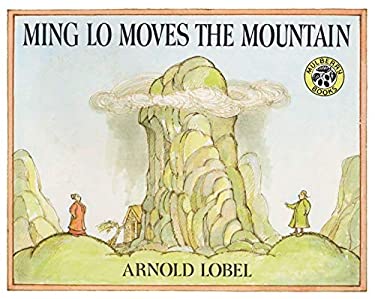
We also read one of my favorite books of our ancient China unit, "Ming Lo Moves the Mountain," by Arnold Lobel.

 Ming Lo and his wife are in a terrible situation, living too close to a very tall mountain: their roof is full of holes from falling rocks, it is always dark and cold, and the rain never stops falling.  Ming Lo gets various pieces of advice from the wise man in the village, but nothing seems to help.  Your second grader can tell you how the problem was eventually solved.  Spoiler: it has to do with this wise bit of advice (that second grade philosophers figured out on their own):  sometimes to solve a problem, you need to change yourself.


The VISION of Cascade Heights:  Cascade Heights fosters the development of the whole child through a rigorous, multisensory, experiential education. Young scholars gain cultural literacy and an appreciation of multiple perspectives through a cumulative, integrated, and objectives-based education. As a small community, we take pride in ourselves and our school, and provide a safe, positive space for young minds, bodies, and hearts to grow.

The MISSION of Cascade Heights Public Charter School  is to inspire the social, emotional, academic, physical, personal, and ethical growth of children and partner with parents who share the same mission to prepare them to be members of a global society.

Our school is a school of choice, and our school is based on a charter which stipulates what curricula we use.  Committing to our school is at least in part committing to our curricula, mission, and vision.  Thank you for your vote of confidence!


Saturday, December 15, 2012

Recent Events and Advice for Parents


Mrs. Denman has forwarded some useful resources for developmentally appropriate dialog with children in the wake of the tragedy in Connecticut, as well as the expectations for CHPCS staff.

You, as the primary educators of your children, know what is best and appropriate for your little ones.  Below you will find some advice from professionals that may or may not fit with your family's worldview.  I hope you find it helpful.

1.  The National Association of School Psychologists have an excellent handout available here in .pdf form.

2.  The text of an article approved and distributed by Mrs. Denman:
How to Talk with Kids About School Shootings
By Traci Pedersen Associate News Editor
Reviewed by John M. Grohol, Psy.D. on March 1, 2012

Mental Health America offers the following suggestions for teachers and parents as they begin discussions with young people regarding the recent school shootings in Chardon, Ohio:

•Talk honestly about the incident, without graphic detail, and share some of your own feelings about it. It is important that students feel informed.
•Encourage students to talk about their concerns and to express their feelings, and validate the young person’s feelings and concerns.
•Limit television viewing. It can be difficult for children to process the images and messages in news reports.
•Empower young people to take action about their own school safety. Encourage them to share their concerns about school safety with school officials.
•Recognize what may be behind a young person’s behavior. They may minimize their concerns outwardly, but may become argumentative, withdrawn or allow their school performance to decline.
•Keep the dialogue going even after media coverage subsides. Continue to talk about feelings and discuss actions being taken to make schools and communities safer.
•Seek help when necessary. If you are worried about a young person’s reaction or have ongoing concerns about his or her behavior or emotions, contact a mental health professional at their school or at your community mental health center. Your local Mental Health America affiliate can direct you to resources in your community.

“Our hearts go out to the families of the victims of the Chardon, Ohio, shootings. It is still too early to know yet why this individual took a firearm to a school and shot students,” said David Shern, Ph.D., president and CEO of Mental Health America.

“We do know that events like this will impact students and families in Chardon and the nation. Many students may feel at risk and may experience feelings of anxiety and fear. Parents may be groping with how to discuss these and similar events with their children.”

Mental Health America is a century-old nonprofit group dedicated to promoting mental health, preventing mental and substance use conditions and achieving victory over mental illnesses and addictions through advocacy, education, research and service.

Source: Mental Health America

3.  From Fred Rogers:  "When I was a boy and I would see scary things in the news, my mother would say to me, "Look for the helpers. You will always find people who are helping." To this day, especially in times of "disaster," I remember my mother's words and I am always comforted by realizing that there are still so many helpers – so many caring people in this world."

4.  These are the guidelines from Mrs. Denman I am to follow as your child's teacher:
A. Teacher's role in facilitating conversation about violence in the community.  This varies depending on age of child, and if the child was exposed to the violence or not.   I want to confirm a professional's viewpoint here.   K- 3rd should be shielded from information when possible. It is my expectation that any conversation will be shut down or redirected in grades K-3 – “It was an accident. It happened far, far away. The people in charge took care of it. Everyone is safe now.” are the words you are to use.  At this age, many parents don’t want their children to know about violence. They aren’t capable of handling the emotional content anyway.  As a parent, I would rather be the one facilitating a conversation such as this at any age.  But not all parents will do that.  You may need to refer a student to me and should know when that is.

Monday, December 10, 2012

Chopsticks!

Update:  We started practicing today!  Below you will find pictures illustrating the basic concept of using chopsticks.  Students also brainstormed lunch and snack items that would be chopstick-friendly, and how we could make other foods more so (cut it up into bite size chunks).  Some of those items are: corn, cut-up sandwich, grapes, noodles/spaghetti, veggies, popcorn, and more!

I explained one way to use chopsticks today, and we will view this video tomorrow to see if we can get more students mastering chopsticks.  

I hope your whole family jumps on board with this great opportunity to master this fine-motor skill!


The Core Knowledge units are getting away from us here in second grade!  Our next field trip to the Chinese Gardens and lunch at a Chinese restaurant is swiftly approaching.  Our mission statement clearly states that we are preparing children to become members of a global society.  As such, our lunch will be at a Chinese restaurant (which may or may not be new to your second grader), and it will be eaten with chopsticks by all in attendance.

Second graders are capable of great things if given proper support and practice.  Starting Wednesday, second grade will be using chopsticks to eat at school.  If possible, please send your child with a chopstick-friendly lunch.  At home, if you have chopsticks, I encourage you to encourage your second grader to eat at least some of dinner with chopsticks each night.  When we leave for winter break, they will bring their chopsticks home to continue practicing.


Tuesday, December 4, 2012

Simple Machines

We have started our study of simple machines.  There are different lists of the "official" simple machines, but the six we will be focusing on are:
  • Monday: inclined plane
  • Tuesday:  wedge (basically an inclined plane)
  • Wednesday: screw (inclined plane wrapped around a post
  • Thursday: wheel and axle (the roundness of the wheel moves effort over distance, just like an inclined plane)
  • Thursday:  pulley/block and tackle (a special kind of wheel and axle)
  • Monday:  lever (must have a fulcrum)
 
Here is a link to the Prezi I created for second grade to teach about simple machines.

Please note that a tool (like a can-opener) has simple machines in it.  A knife is a tool; it has a wedge for its simple machine.

 
VOLUNTEER:
Please remember that we're having a Simple Machines workshop on Tuesday, December 11, from 12:30 to...  The more adult volunteers, the better.

NEEDS:
If you have old machines (blenders, VCRs, fans, etc.) at home that we can take apart, please send them in with your second grader.

AT-HOME:
Your second grader is welcome to bring in a tool that has a simple machine in it, provided it:
A) is safe to bring to school, and
B) he/she can explain  1) the name of the tool 2) what it is used for and 3) what simple machine(s) it has.

Here are some tools with simple machines we looked at today (with a focus on the wedge):

 Tool:  knife; Use: cutting, dividing, slicing; Simple machine: wedge.
 Tool: apple slicer; Use: dividing apple; Simple machine: wedge.
 Tool: can opener; Use: opening cans; Simple machines: wheel, wedge, lever (can you spot them all?).
 Tool: spatula; Use: lifting/flipping food; Simple machines: wedge, lever (bonus: where is the fulcrum?).
 Tool: Scissors; Use: cutting; Simple machines: wedges, lever (actually, there are TWO levers on these scissors!).
 Tool: vegetable peeler; Use: peeling vegetables and fruits; Simple machines: wedges.
Tool: grater; Use: grating; Simple machines: wedges, lots of little wedges.

CURRICULUM:
From the Core Knowledge Sequence:
V. Simple Machines
Teachers: Examine with children how specific tools are made to perform specific jobs—for example,
hammers, screwdrivers, pliers, etc. Through observation and experimentation, examine with children
how simple machines help make work easier, and how they are applied and combined in familiar tools and machines.
• Simple machines
lever
pulley
wheel-and-axle
gears: wheels with teeth and notches
how gears work, and familiar uses (for example, in bicycles)
inclined plane
wedge
screw
• Friction, and ways to reduce friction (lubricants, rollers, etc.)